How a synchrotron makes light
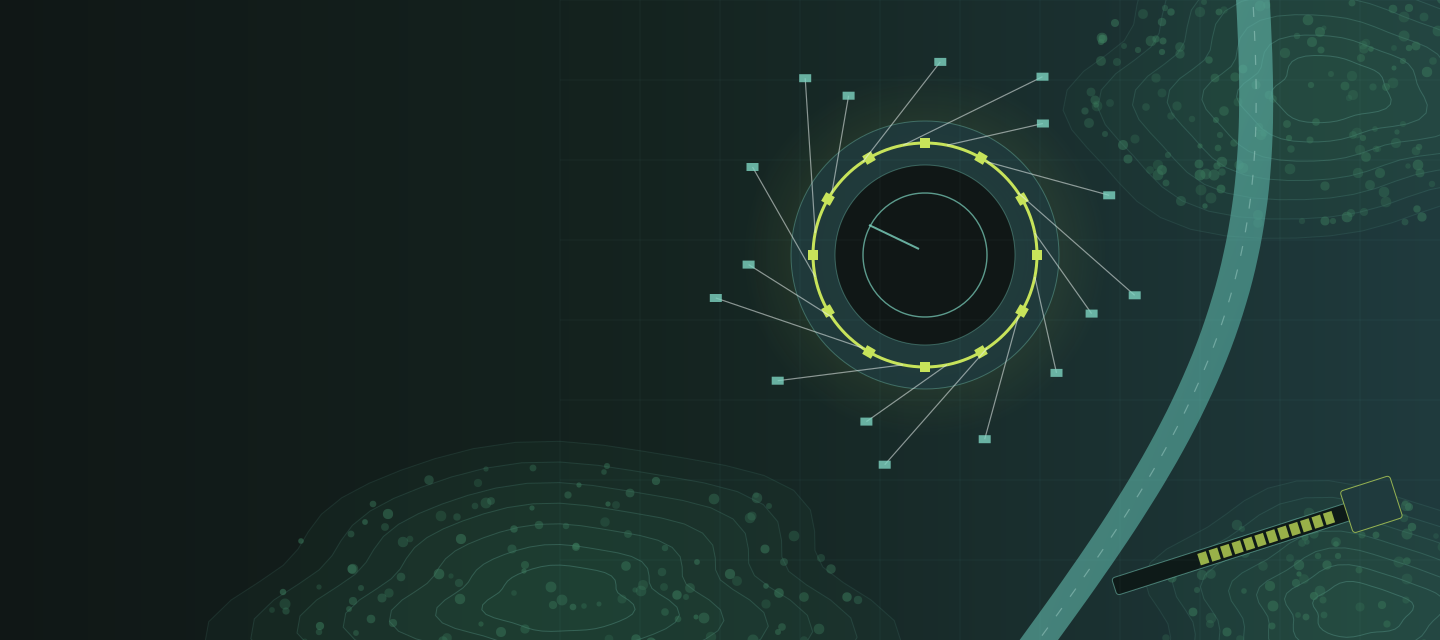
Electrons are first produced and accelerated in a linear accelerator, then brought up to their final speed in a second accelerator, a booster synchrotron, and finally fed into the storage ring. There they travel at almost the speed of light along a path with a circumference of 288 metres.
Magnets bend the electrons onto their curved track, and whenever an electron’s path bends it gives off light, which leaves the ring tangentially. Special magnet arrays called undulators and wigglers force the electrons into a slalom, which concentrates the light into a sharp beam at chosen wavelengths. Beamlines then carry the light from the ring to experimental stations, where each research group can choose the wavelength it needs.
From infrared to X-rays
The light from the SLS ranges from infrared to soft and hard X-rays. Longer wavelengths are used to study surfaces; X-rays look into the bulk of a material.
PSI lists a wide range of uses: working out the structure of protein crystals for drug development, studying magnetic surfaces for data storage, catalysts and low-friction surfaces, solar cells and high-temperature superconductors, and three-dimensional imaging of biological materials.
Twenty-two years of the first ring
Construction of the SLS began in 1998; it produced its first synchrotron light in 2000 and was inaugurated on 19 October 2001. The original machine stored electrons with an energy of 2.4 GeV. To keep the beam steady, new electrons are injected into the ring every few minutes to replace those that are lost.
SLS 2.0: a new ring in the old building
On 30 September 2023, after 22 years of operation, the SLS was shut down for an upgrade called SLS 2.0. The storage ring was replaced with a new one of the same 288-metre circumference, built inside the existing building, with around 1,000 high-precision magnet systems arranged in what PSI calls a seven-bend achromat design. Electrons returned to the ring on 23 January 2025, and the new SLS was inaugurated on 21 August 2025.
According to PSI, the new ring makes light up to 1,000 times brighter at some beamlines, reduces the spread of the electron beam (its emittance) by a factor of up to about 40 and uses about a third less electricity.
The beamlines are being brought back in two phases. PSI’s SLS 2.0 page said that regular user operation of the first phase of beamlines was expected in mid-2026, after a short second shutdown at the start of 2026, and that most beamlines were expected to serve users by autumn 2026. For the current state of a particular beamline, see PSI’s own pages (status as of 3 November 2026).
Sources
- PSI, The Swiss Light Source SLS
- PSI, Frequently asked questions on synchrotron light
- PSI, About Swiss Light Source
- PSI, The history of PSI
- PSI, SLS 2.0 – The upgrade of the Swiss Light Source SLS
- PSI, A bright light for Switzerland: The new Swiss Light Source is inaugurated (21 August 2025)
- PSI, SLS 2.0
Sources checked on: 3 November 2026